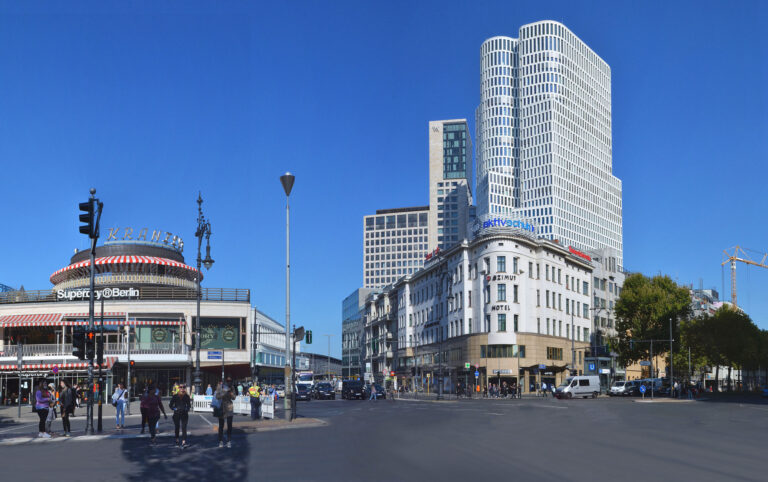
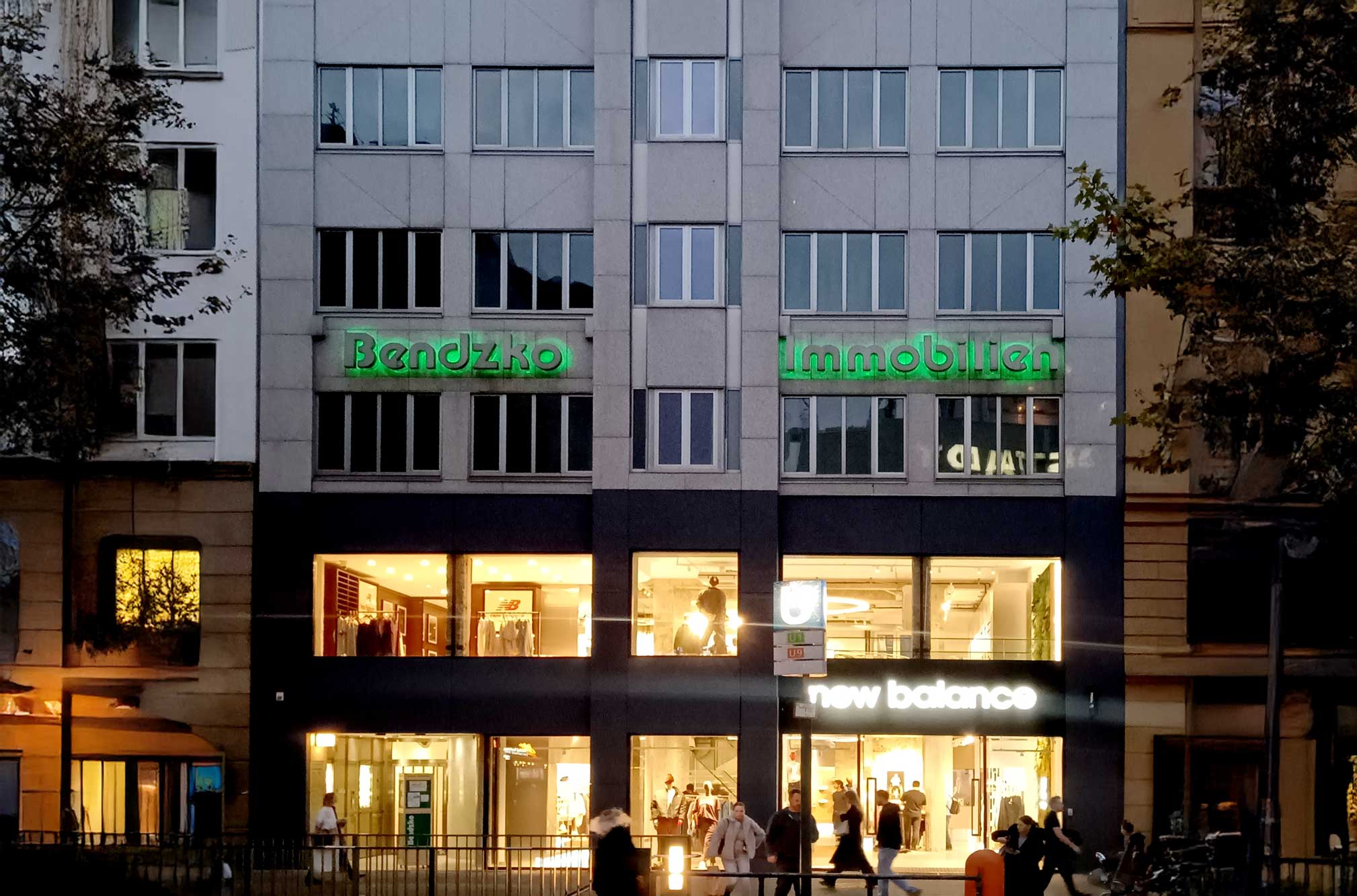
Bendzko Immobilien am Ku-Damm in der Abenddämmerung beleuchtet

Your Guide to

Selling Property

Make Use of Our Expertise

You don’t sell a property every day. Many people therefore lack basic knowledge: How much is my property worth? When is the right time to sell? What does the sales process look like? How can a real estate agent help me? Here, we provide you with useful tips and background information.

Whether a condominium, single-family home, multi-family house, or rental property – selling real estate is a complex process that we guide you through step by step, as your reliable partner from start to finish.

Your Contact

Constantin Bendzko
constantin@bendzko.de
Contact

FAQ: Selling Property

Answers to Your Most Important Questions

You don’t sell a property every day. Many people therefore lack basic knowledge: How much is my property worth? When should I sell? What does the sales process look like? How can a real estate agent help me? Here, we provide you with useful tips and background information.
There is no “perfect” time to sell a property. Anyone looking to sell can achieve an excellent price at any time. Often, the timing of a sale is determined by changes in the owner’s circumstances: inheritance, relocation, divorce, or career shifts can make selling necessary or worthwhile. In general, selling during a strong market phase is easier. If you can choose the timing, aim for a period when prices are at a cyclical high – low interest rates and high demand. Within the year, the months from April to October typically see faster sales, as suitable buyers are quickly found. If you plan to sell at another time of year, consider using additional photos showing impressions from the summer months – for example, the green surroundings or the garden. Timing, however, isn’t everything. The overall timeframe also matters: selling under time pressure weakens your negotiating position. A potential buyer who senses urgency will likely try to lower the price.
Of course, every seller wants to achieve the maximum profit. But simply setting a high price is no guarantee of success. Owners who are emotionally attached to their property often overprice it. As a result, potential buyers are deterred, and the property lingers on the market. The longer it stays listed, the more it appears to be a “shelf warmer,” and may eventually have to be sold at a much lower price. Publicly available information – such as online listings, newspaper ads, or free statistics – can also create unrealistic price expectations. Treat such figures only as rough guidelines. On the other hand, setting a price below market value ensures a quick sale but means unnecessary financial loss. We therefore recommend an objective valuation by an experienced real estate agent. A professional valuation provides a solid basis for realistic price negotiations.

Anyone selling a property must know its exact value. This prevents the asking price from being set too high or too low. Based on the property appraisal, the agent can then conduct fact-based negotiations with potential buyers. Clear figures and data also help shorten the negotiation process – your advantage: you can sell your property faster and at a fair market price.

A property valuation is complex and goes far beyond average price-per-square-meter data. Among other things, the following factors influence the sales price:

  • Year of construction: New builds and genuine historic buildings generally achieve higher prices than properties from the 1950s, 60s, or 70s.
  • Floor level: Ground-floor apartments usually sell for less than upper-floor units, as burglary risk and heating costs are higher. Typically, the higher the floor, the higher the price.
  • Outdoor areas, built-ins, and room layout: Terraces, balconies, gardens, fitted kitchens, and fireplaces all increase value. Likewise, popular sizes with 3 to 5 rooms tend to achieve better prices.
You can sell both tenanted and vacant properties at good prices. While tenanted properties are more appealing to investors, private buyers usually prefer vacant units, which are easier to sell and fetch higher prices. Vacant properties can sell for up to 30% more. The reason: if a property is rented, tenants enjoy strong legal protection. A lease cannot simply be terminated, and lifelong tenancy rights can make selling even harder. Only unpaid rent or a claim of owner-occupation can override tenant protection. Likewise, rent increases are restricted by local laws and the city’s rent index. Be sure to inform current tenants in advance about your intention to sell.
Taxes are an important consideration when selling a property – specifically, whether they must be paid. In general, if fewer than 10 years have passed between purchase and sale, a capital gains tax may apply, plus solidarity surcharge and church tax. Sellers are exempt if they have lived in the property themselves since its construction or purchase, or if it has been used for their own residential purposes (not rented) for at least three years. Privately used holiday homes are also tax-exempt. Always clarify your tax situation before selling to avoid unpleasant surprises.
First impressions matter – for people and for properties alike. Especially if you’re offering your property in a higher price range, an attractive presentation can pay off. Some light renovation may be worthwhile, as it helps attract financially strong buyers. However, renovations are not always necessary. They can take time and money, and sellers must recoup those costs through a higher sale price. Your agent can advise you whether renovation makes sense in your specific case.
Selling a property requires several documents – including land register extract, energy certificate, floor plans, site map, and details on existing loans or leases. Our checklist provides an overview of all necessary documents for each property type, allowing you to systematically check what you already have and what is missing. We’re happy to assist you in compiling the required paperwork.
Checkliste "Dokumente für den Immobilienverkauf"

FAQ: Real Estate Terminology

A Quick Glossary of Key Terms

The term Auflassung refers to the transfer of ownership or the official change of ownership. The Auflassungsvormerkung is the most common type of priority notice listed in Section II of the land register. It secures the buyer’s claim to ownership transfer until their final registration as the new owner. In short, it serves the protection of the buyer and prevents the seller from selling the property again.

An Aufteilungsplan (partition plan) according to § 7 Abs. IV WEG is a “building drawing signed and stamped by the building authority, showing the division of the building and the location and size of the units in private and common ownership.” For the sale of a residential complex, for example, a detailed partition plan is essential.

The Aufteilungsplan clearly separates common property from private property. All rooms belonging to the same apartment or unit must be marked with the same number (§ 7 Abs. IV S.2 WEG), making ownership relations clear.

A Dienstbarkeit is a legal right to use someone else’s property. Different types of usage rights can exist on land:
  • Easements (e.g. right of way, right to lay pipes)
  • Limited personal easements (e.g. right of residence, right of use)
  • Usufruct
All encumbrances and restrictions can be found in the Grundbuch (land register). Section II lists rights such as usufruct, pre-emption rights or easements; Section III contains liens and mortgages.

In Germany, any property owner who wants to sell, rent or lease a property is required to have an Energieausweis (energy performance certificate), as stipulated by the Energy Saving Ordinance (EnEV).

The Energieausweis shows the essential energy characteristics of a property and indicates the final and primary energy demand in kWh/m2a. It also assigns the property to an energy efficiency class (A+ to H).

The energy certificate is usually consumption-based, meaning it reflects the actual energy consumption of the occupants over the past three years. It is based primarily on the last three energy bills from the respective suppliers. Note that the reference area used may differ from the actual living area.

For residential buildings with up to four units built before 1977, a demand-based energy certificate is also required. In that case, an expert evaluates the building’s structure and determines its theoretical energy demand.

Don’t have one yet? We are happy to assist you – or you can order it directly online at https://online-energieausweis.de
.

The Grundbuch (land register) is a public, official record of all properties. It lists ownership details and any rights or encumbrances affecting the property. Each property has its own land register sheet maintained by the district court. The land register consists of several parts. The property index lists the location and size based on cadastral data (district, plot, parcel). Then follow three main sections: Section I records ownership details. For married couples, for example, it often notes “each owning half.” Section II lists easements and restrictions (e.g. right of way, right of residence, pre-emption rights). Section III records financial encumbrances such as mortgages and land charges. Since a land charge is not automatically deleted after a loan is repaid, it may remain in the register. When refinancing with another bank, it is cheaper to assign the existing land charge rather than delete and re-enter it. A Grundbuchauszug is a certified copy of all entries in the land register for a specific property.
A condominium owners’ association (WEG) usually builds up an appropriate maintenance reserve (Instandhaltungsrücklage), the amount of which is decided during the annual meeting (§21 Abs. 5 Nr. 4 WEG). This reserve serves as a fund for future maintenance or repairs (e.g. facade renovation) and for covering unexpected repair costs. The reserve is generally collected in monthly installments through the owners’ Wohngeld payments. The type of investment is determined by majority vote.

The Teilungserklärung (declaration of division) regulates ownership relations within a condominium property (e.g. in an apartment building).

It defines private and common property, specifies use rights and obligations, and follows the provisions of the Condominium Act (WEG). Typically, the declaration includes:

  1. Aufteilungsplan (partition plan)
  2. Abgeschlossenheitsbescheinigung (certificate of self-contained units)
  3. Gemeinschaftsordnung (community rules)

1) The Aufteilungsplan distinguishes private from common property and assigns each unit a number.

2) The Abgeschlossenheitsbescheinigung confirms that each unit is structurally separate and self-contained.

3) The Gemeinschaftsordnung sets out the internal rules for the owners’ community.

According to the Condominium Act, minutes (Protokolle) must be taken of every owners’ meeting (§24 Abs. 6 Satz 1 WEG).
These minutes, usually prepared by the property manager, must record both approved and rejected resolutions.
All resolutions are then entered into the Beschluss-Sammlung (record of resolutions), which documents all decisions ever made.
For a property sale, the last three sets of meeting minutes and the decision record are required.

A condominium owners’ association (WEG) must have sufficient funds to cover common property management costs. Expenses are paid proportionally by each owner as Wohngeld (maintenance fees). These are advance payments for the property’s annual operating costs. Each association needs a solid Wirtschaftsplan (financial plan). The Wirtschaftsplan is drawn up annually by the property manager and forecasts the expected costs for the coming year. It estimates potential increases, fixed additional expenses and possible payment defaults.
Each owner receives an individual financial statement based on the agreed distribution key. According to §16 II WEG, each owner must pay their share of:
  • Maintenance
  • Repairs
  • Administration
  • Common use
The amount of the monthly Wohngeld payment is determined by the Wirtschaftsplan. The property manager informs owners annually of the advance payments for the following year.

What Are the Advantages of Hiring a Real Estate Agent?

6 Key Benefits of Working with a Professional

1. Benefit:

Personalized Consultation

A good agent takes time to understand their client’s goals. Together, strategies for a successful sale can be developed more efficiently, helping avoid common mistakes.

2. Benefit:

Qualified Property Valuation

An accurate property valuation is crucial for a successful sale. Most owners lack the experience and tools to assess value correctly. Online calculators are often insufficient. The solution: hire a Bendzko Immobilien agent. Our expertise and market knowledge ensure an objective, professional valuation — free of charge and without obligation.

3. Benefit:

Tailored Marketing Strategy

Every property and seller is unique — and so is the market. A skilled agent recognizes a property’s potential and unique features, translating them into effective marketing. With the right tools — from listings and ads to targeted outreach — sales can be faster and more profitable.

4. Benefit:

Coordination of Buyers and Professional Viewings

Bendzko Immobilien presents your property professionally and appealingly. We handle all communication with potential buyers and coordinate viewings, saving sellers valuable time. As neutral intermediaries, we receive honest feedback that helps address any buyer concerns early on.

5. Benefit:

Contract Negotiations and Legal Security

Successful property sales require expertise, market insight and negotiation skills. We at Bendzko Immobilien guide you through contract drafting and negotiations, ensuring full legal compliance. We make sure all obligations are met — from property condition disclosures to easement information.

6. Benefit:

Established Professional Network

Bendzko Immobilien works with a trusted network of experts across the real estate industry — connecting you with qualified buyers, legal specialists and notaries to streamline the process.

Contact
Constantin Bendzko

Constantin Bendzko ist die 3. Generation im Familienunternehmen

Write to us.