
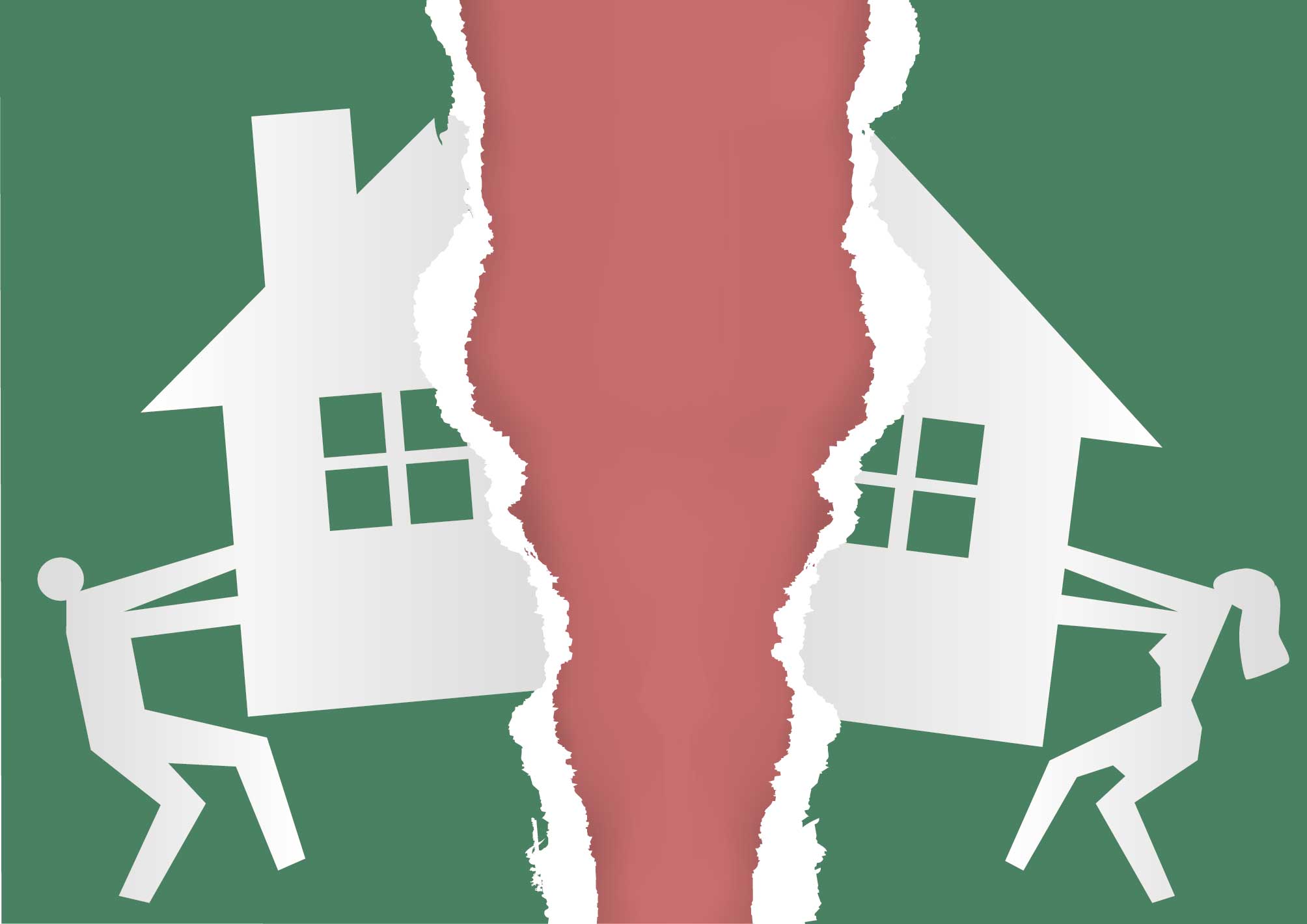
This is a topic that often causes sleepless nights for our clients. Being well-informed and taking a structured approach can save a lot of time and stress during an already difficult phase.
Answers to Your Key Questions
FAQ: Divorce and Property
What happens to the house during a divorce?
In a divorce, the house usually belongs to both spouses jointly, unless other contractual arrangements exist. Then it must be decided whether the house is sold, transferred to one spouse, or the other spouse is compensated.
How is the house divided in a divorce?
If both spouses are listed as owners in the land register, the division is generally equal. However, if there is a different ownership arrangement or a marriage contract, the rules specified therein apply.
Can one spouse keep the house?
Yes, it is possible for one spouse to keep the house. Typically, the other spouse must be compensated for their share of the property value. Existing mortgages must also be assumed or restructured.
How much does the other spouse receive if the house is sold?
In the case of a sale, the sale proceeds minus any outstanding liabilities are divided according to the ownership shares. With joint 50/50 ownership, both partners usually receive 50% each.
How is the value of the house determined in a divorce?
We determine the property value as part of a free market appraisal, based on a property inspection and factors such as location, condition, size, and features.
Do I need a notary to transfer the house during or after a divorce?
Yes, any changes in the land register – for example, the transfer of an ownership share – must be notarised. Compensation to a spouse or refinancing of existing mortgages should also be legally secured. Legal advice is recommended in these cases to protect your interests and avoid potential disputes.